Why Is My Period Late: 8 Possible Reasons Worried about a late period, but know you’re not pregnant? Missed or late periods happen for many reasons other than pregnancy. Common causes can range from hormonal imbalances to serious medical conditions.
An illustration of a girl in her periods (courtesy).
There are also two times in a woman’s life when it’s totally normal for her period to be irregular: when it first begins, and when menopause starts. As your body goes through the transition, your normal cycle can become irregular.
Most women who haven’t reached menopause usually have a period every 28 days. However, a healthy menstrual cycle can range from every 21 to 35 days. If your period doesn’t fall within these ranges, it could be because of one of the following reasons.
Stress Stress can throw off your hormones, change your daily routine, and even affect the part of your brain responsible for regulating your period — your hypothalamus. Over time, stress can lead to illness or sudden weight gain or loss, all of which can impact your cycle.
If you think stress might be throwing off your period, try practicing relaxation techniques and making lifestyle changes. Adding more exercise to your regimen may help get you back on track.
Low body weight Women with eating disorders, such as anorexia nervosa or bulimia, may experience missed periods. Weighing 10 percent below what’s considered a normal range for your height can change the way your body functions and stop ovulation. Getting treatment for your eating disorder and putting on weight in a healthy way can return your cycle to normal. Women who participate in extreme exercise such as marathons may stop their periods as well.
Obesity Just as low body weight can cause hormonal changes, so can being overweight. Your doctor will recommend a diet and exercise plan if they determine that obesity is a factor in your late or missed periods.
HEALTHLINE NEWSLETTER Get our weekly Endometriosis email To support your endo journey, we’ll send you first-hand stories and tips for managing chronic pain, fatigue, and more.
Polycystic ovary syndrome (PCOS) Polycystic ovary syndrome (PCOS) is a condition that causes your body to produce more of the male hormone androgen. Cysts form on the ovaries as a result of this hormone imbalance. This can make ovulation irregular or stop it altogether.
Other hormones, such as insulin, can also get out of balance. This is due to insulin resistance, which is associated with PCOS. Treatment for PCOS focuses on relieving symptoms. Your doctor may prescribe birth control or other medication to help regulate your cycle.
Birth control You may experience a change in your cycle when you go on or off birth control. Birth control pills contain the hormones estrogen and progestin, which prevent your ovaries from releasing eggs. It can take up to six months for your cycle to become consistent again after stopping the pill. Other types of contraceptives that are implanted or injected can cause missed periods as well.
Chronic diseases Chronic diseases such as diabetes and celiac disease also can affect your menstrual cycle. Changes in blood sugar are linked to hormonal changes, so even though it’s rare, poorly controlled diabetes could cause your period to be irregular.
Celiac disease causes inflammation that can lead to damage in your small intestine, which may prevent your body from absorbing key nutrients. This can cause late or missed periods.
Early peri-menopause Most women begin menopause between ages 45 to 55. Women who develop symptoms around age 40 or earlier are considered to have early peri-menopause. This means your egg supply is winding down, and the result will be missed periods and eventually the end of menstruation.
Thyroid issues An overactive or underactive thyroid gland could also be the cause of late or missed periods. The thyroid regulates your body’s metabolism, so hormone levels can be affected as well. Thyroid issues can usually be treated with medication. After treatment, your period will likely return to normal.
When to see your doctor Your doctor can properly diagnose the reason for your late or missed period and discuss your treatment options. Keep a record of changes in your cycle as well as other health changes to show your doctor. This will help them make a diagnosis.
If you have the following symptoms, contact a doctor right away:
unusually heavy bleeding fever severe pain nausea and vomiting bleeding that lasts longer than seven days bleeding after you’ve already entered menopause and had not had periods for a year
Bobi Wine’s blue eyed boy and spokesperson of the people power movement shocked the world when he wedded in a scientific way.
The glittering smile on both couples was the odd of the day! Congratulations 🎉👏
Many bloggers and politicians have been criticising the former NTV presenter for not having ‘what to chew’ at that age! Ssenyonyi has on several occasions replied to such critics that he’s still virgin and has never eaten or tasted the ‘forbidden fruit’!
Jolly Ssenyonyi looking at fiance with glowing eyes ready for the night since he’s been a virgin ‘boy’!
“I support American Floyd Protesters to bring about change against racial injustices” – Obama
America
Former United States of America president and first black American to rule world super power Mr.Barack Obama has given his insight on the gruesome death of Mr.George Floyd who was killed last week in Minneapolis by a US Police officer who’s currently incarcerated.Obama says that it’s time for Police in US to reform it’s practices and decist from acts of racial discrimination. “I support protesters to bring about change” Obama said.Below is his statement.As millions of people across the country take to the streets and raise their voices in response to the killing of George Floyd and the ongoing problem of unequal justice, many people have reached out asking how we can sustain momentum to bring about real change.Ultimately, it’s going to be up to a new generation of activists to shape strategies that best fit the times. But I believe there are some basic lessons to draw from past efforts that are worth remembering.First, the waves of protests across the country represent a genuine and legitimate frustration over a decades-long failure to reform police practices and the broader criminal justice system in the United States. The overwhelming majority of participants have been peaceful, courageous, responsible, and inspiring. They deserve our respect and support, not condemnation – something that police in cities like Camden and Flint have commendably understood.On the other hand, the small minority of folks who’ve resorted to violence in various forms, whether out of genuine anger or mere opportunism, are putting innocent people at risk, compounding the destruction of neighborhoods that are often already short on services and investment and detracting from the larger cause. I saw an elderly black woman being interviewed today in tears because the only grocery store in her neighborhood had been trashed. If history is any guide, that store may take years to come back. So let’s not excuse violence, or rationalize it, or participate in it. If we want our criminal justice system, and American society at large, to operate on a higher ethical code, then we have to model that code ourselves.Second, I’ve heard some suggest that the recurrent problem of racial bias in our criminal justice system proves that only protests and direct action can bring about change, and that voting and participation in electoral politics is a waste of time. I couldn’t disagree more. The point of protest is to raise public awareness, to put a spotlight on injustice, and to make the powers that be uncomfortable; in fact, throughout American history, it’s often only been in response to protests and civil disobedience that the political system has even paid attention to marginalized communities. But eventually, aspirations have to be translated into specific laws and institutional practices – and in a democracy, that only happens when we elect government officials who are responsive to our demands.Moreover, it’s important for us to understand which levels of government have the biggest impact on our criminal justice system and police practices. When we think about politics, a lot of us focus only on the presidency and the federal government. And yes, we should be fighting to make sure that we have a president, a Congress, a U.S. Justice Department, and a federal judiciary that actually recognize the ongoing, corrosive role that racism plays in our society and want to do something about it. But the elected officials who matter most in reforming police departments and the criminal justice system work at the state and local levels.It’s mayors and county executives that appoint most police chiefs and negotiate collective bargaining agreements with police unions. It’s district attorneys and state’s attorneys that decide whether or not to investigate and ultimately charge those involved in police misconduct. Those are all elected positions. In some places, police review boards with the power to monitor police conduct are elected as well. Unfortunately, voter turnout in these local races is usually pitifully low, especially among young people – which makes no sense given the direct impact these offices have on social justice issues, not to mention the fact that who wins and who loses those seats is often determined by just a few thousand, or even a few hundred, votes.So the bottom line is this: if we want to bring about real change, then the choice isn’t between protest and politics. We have to do both. We have to mobilize to raise awareness, and we have to organize and cast our ballots to make sure that we elect candidates who will act on reform.Finally, the more specific we can make demands for criminal justice and police reform, the harder it will be for elected officials to just offer lip service to the cause and then fall back into business as usual once protests have gone away. The content of that reform agenda will be different for various communities. A big city may need one set of reforms; a rural community may need another. Some agencies will require wholesale rehabilitation; others should make minor improvements. Every law enforcement agency should have clear policies, including an independent body that conducts investigations of alleged misconduct. Tailoring reforms for each community will require local activists and organizations to do their research and educate fellow citizens in their community on what strategies work best.But as a starting point, I’ve included two links below. One leads to a report and toolkit developed by the Leadership Conference on Civil and Human Rights and based on the work of the Task Force on 21st Century Policing that I formed when I was in the White House. And if you’re interested in taking concrete action, we’ve also created a dedicated site at the Obama Foundation to aggregate and direct you to useful resources and organizations who’ve been fighting the good fight at the local and national levels for years.I recognize that these past few months have been hard and dispiriting – that the fear, sorrow, uncertainty, and hardship of a pandemic have been compounded by tragic reminders that prejudice and inequality still shape so much of American life. But watching the heightened activism of young people in recent weeks, of every race and every station, makes me hopeful. If, going forward, we can channel our justifiable anger into peaceful, sustained, and effective action, then this moment can be a real turning point in our nation’s long journey to live up to our highest ideals.Let’s get to work
According to research we have gathered, many people have been claiming that Katikkiro Charles Peter Mayiga has become so wealthy since his appointment to that position in May 2013 by Ssaabasajja Kabaka Ronald Muwenda Mutebi which seems not to be true.
It has also been claimed that Katikkiro got all his wealth mostly from the collection of Etafaali which is far from the truth. If anything, his income has actually gone down. When asked what Mayiga has stolen since that is the implication, they quickly point to his private residence in Lweza.
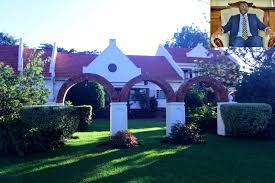
The Truth About Katikiro Mayiga’s House according to a one Makerere don.
Mayiga and his wife Margaret bought the land in Lweza in 1995 and started building their home in 1996. It is private mailo land. They were keen to occupy the house before the end of the millennium and did so in 1999. It was incomplete.
A jolly, charming and happy Katikkiro,he replaced Owek.J.B.Walusimbi
He built it in the same way most Ugandans who genuinely make their money build their homes. They take time, one brick at a time. I was an undergraduate student at Makerere University and I lent a hand lifting a box or two to help them move into it. Over the years, they have kept improving this house until 2006 when they completed it seven years before his appointment as Katikkiro. Since his appointment as Katikkiro, Mayiga has not done anything to his private residence apart from regular maintenance such as painting.
In fact, in June 2013, with the official residence (Butikkiro) still occupied by government, Mayiga held Embaga ya Ddamula at Lweza which was attended by over 1500 people. I was Secretary to the organising committee. Embaga ya Ddamula is a function a Katikkiro organizes to celebrate the appointment and managing to keep Ddamula from other people interested in it immediately after the Kabaka has handed it over to him. It is a cultural function.
Although the house is palatial, it is not something out of reach for him and his wife. I have known the Mayigas for many years and they like good things. But they mind so much about their name that they ensure the good things in life come from genuine hard work not through under table deals. To date, if you combine the years Mayiga and his wife have been working, it comes to about 60 years. So how can a couple that has a combined 60 years of working experience fail to build the kind of home in which they live today? If they worked for a combined 60 years and failed to build such a house, they would be total failures.
Residents of Kyebando,Erisa zone near Kaleerwe have chased a 32 year old man due to engaging in acts of sodomy.Lule Iga Bashir who is a teacher at a certain school is said to have engaged in ‘sex’ activities with five male pupils,he was arrested by Wandegeya police station but later released on Police bond, something that angered Kyebando residents and one of the victim’s parent. The LC1 chairman of Erisa zone Mr.Godfrey Nkuubi revealed that various reports have pinned that Lule truly sodomized his students and that he should leave the said village since they can’t bare with his acts.
Accidents are on increase in Uganda,one almost claimed Hon.Francis Mwijukye
Nasana Police station is investigating a fatal accident that happened today 25/05/2020 at 5:17 P at Yesu Amala .
It is alleged that one Sempala Musa , 52 , a resident of Bwaise 2 zone Kawempe Division Kampala District , while riding on motorcycle Reg No. UDM 081L bajaj boxer red in colour hit a motor vehicle Reg No. UBA 310H, Isuzu Elf white in colour that was carrying metallic doors and timber.
Sempala hit it from the rear as he was allegedly dodging the Tyre cutters at the checkpoint , he sustained serious injuries and was taken to KEDI Clinic where he was pronounced dead on arrival.
We have impounded the Isuzu Elf , unfortunately the driver fled the scene after the accident .
However , two occupants of the isuzu elf have been arrested to help us with investigations preferably the details of the driver.
The body of the deceased person was later picked by UP 2570 from Kedi Clinic and taken to city mortuary Mulago for postmortem.
Both the motorcycle and vehicle are parked at Lubigi police post as investigations into the matter go on .
• Avoid grabbing or twisting, asif you’re searching for a radio station.
• Kiss her entire breasts🍑, but ignore her nipples for a few minutes. Breathe over them sexily💦, but don ’t make any physical contact until her body is struggling in pleasure😩💦
• While you’re touching and caressing her, say things like ‘Do you like that? Does that turn you on?’
It doesn’t have to be clinical, just whisper things😘.
• Reach around from behind during doggie style or place her own hands on her breasts as she rides you so she can show you just how she likes to be touched💦.
• Pay attention to her reactions and breathing and the way she moans 😵💦
Most cases of Covid-19 have been imported by Truck drivers
President Museveni addressing the nation from Nakasero State House (file photo). The cabinet sitting Friday at Entebbe State House agreed to lift the lockdown but with strict guidelines, this website has learnt.
The cabinet was chaired by President Yoweri Kaguta Museveni.
The President had tasked the National Task Force Committee together with professionals from the Ministry of Health to give him viable options that would let Ugandans go back to work but at the same time keep the public safe particularly at a time when Uganda has seen increased number of cases from Truck Drivers entering Uganda.
So far 143 drivers are among 202 cases Uganda has registered.
The Minister of Health, according to a source who asked not to be mentioned told cabinet that so far, Uganda would be COVID-19 free had it not been the truck drivers’ cases.
Dr Ruth Aceng said no community case has been recorded in the last 15 days following two Ugandans who tested positive on May 1, 2020 in Mutukula and Masindi district.
At a time of meeting (Friday) Uganda had registered 21 cases of truck drivers and later more 43 drivers tested positive.
The source however couldn’t ascertain whether the 43 new cases will affect the Cabinet Decision.
President Yoweri Kaguta Museveni is expected to brief the country on the decision on Monday night or Tuesday next week since the current lockdown ends Tuesday Midnight.
A separate source privy to Friday cabinet said that among the guidelines agreed on are keeping public transport closed while three people will be allowed in a private car.
Cabinet heard that it will be risky to allow public means considering that cases of truck drivers are emanating from the borders.
According to cabinet the growing number of cases of truck drivers were a threat to a full opening. In turn, they suggested that vital services be given leeway to operate as other measures are instituted.
In the new directives that the President will announce the following will stand out;
Public offices will be opened manned by lean staff who will work under rotation.
Markets and restaurants will continue to operating.
Public transport will stay closed while private vehicles will only have monitored movements till 8pm.
Bars and Entertainment places will remain closed.
Schools and colleges will remain closed as discussions on ‘healthier ways of of keeping the pupils and students safe are discussed.
Curfew will remain but with reviewed operational time.
Don Wanyama, the President’s Press Secretary when contacted said he was not aware of the decisons of cabinet.




 KISS NEWS